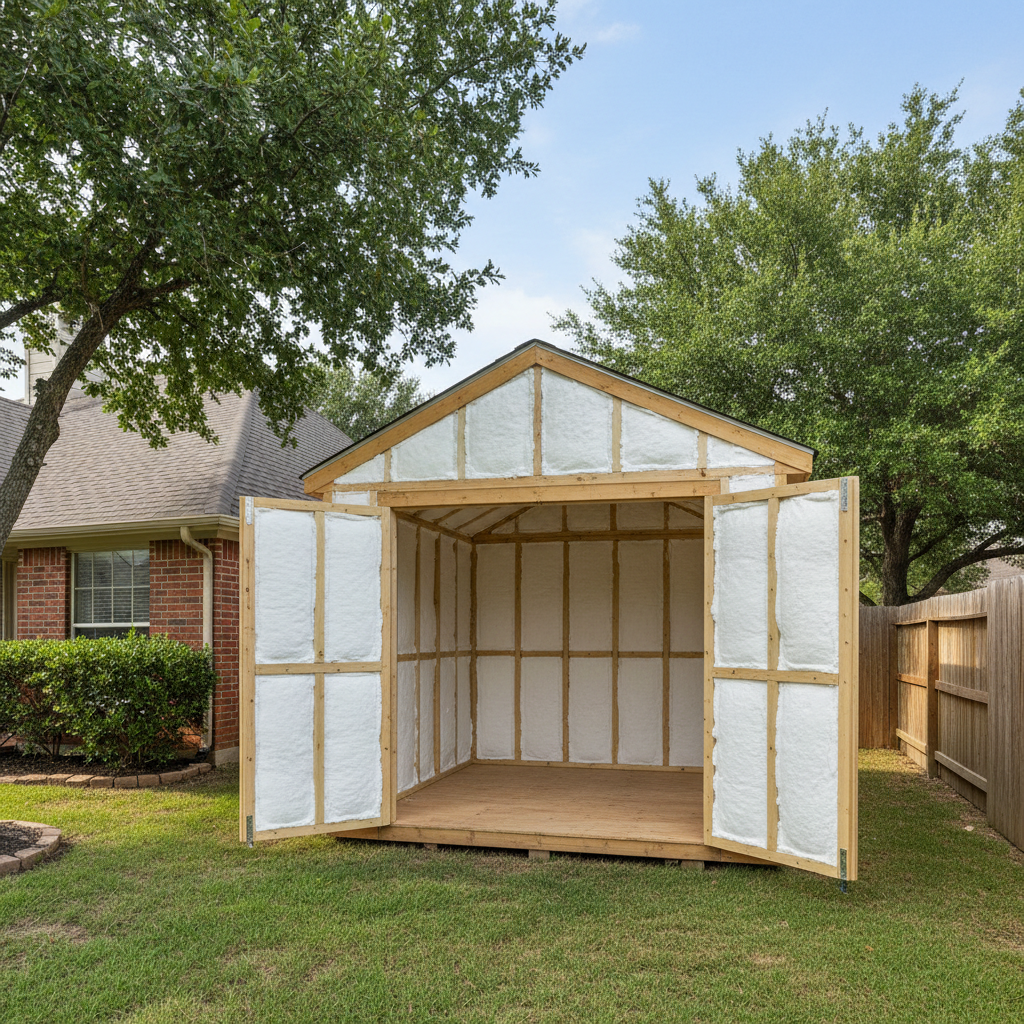
Got a shed out back, do you? Maybe it's just a simple storage spot for the lawnmower and garden tools. Or perhaps it's your workshop, your escape, your 'man cave' or 'she shed' — where you can actually tackle projects away from the main house. Whatever its purpose, if it's not insulated, you're probably fighting a losing battle against the Texas heat. And let's not forget those occasional cold snaps we get right here in Mansfield.
Why Bother Insulating a Shed?
I hear this all the time: 'It's just a shed, why spend the money?' And, honestly, I get it. But let me tell you, especially around here, an uninsulated shed turns into an oven in the summer and a freezer in the winter. That's just not good for anything you're storing in there. Really, think about it:
- Your paint cans? They'll separate and go bad faster in those extreme temperatures.
- Power tools? Heat and humidity can mess with their electronics, even cause rust.
- Anything with a battery? Forget about it.
- If it's a workshop, you're either sweating through your shirt or shivering, which makes it pretty tough to get anything done comfortably.
- Even sensitive documents or old photos you're trying to keep safe can suffer from big temperature swings and moisture.
It's not just about your comfort; it's about protecting the investment you've got stashed away. Plus, if you're ever running power out there for a light or a small heater/AC unit, insulation makes a huge difference in how much energy you're throwing away.
What Kind of Insulation Works Best for Sheds?
Okay, so you're convinced. Now what? You've got a few good options, and what works best often depends on your shed's construction and, of course, your budget.
- Batt Insulation: This is your standard fiberglass or rock wool. It's affordable, plus it's pretty easy to install yourself if you're handy. You'll need to make sure you have a vapor barrier, especially with our humidity. It works great for sheds with standard stud framing.
- Rigid Foam Boards: Products like XPS or polyiso are fantastic because they give you good R-value for their thickness and really resist moisture. You can cut them to fit between studs or even right against the shed walls. They're a bit pricier than batts, but they offer better performance and aren't as prone to issues with pests or moisture, assuming you install them correctly.
- Spray Foam: Now, this is where you get the absolute best performance, no question. Closed-cell spray foam, in particular, creates an airtight seal, adds structural rigidity, and acts as an excellent vapor barrier. It's usually a job for the pros, but if you're building a new shed or truly want to turn an existing one into a climate-controlled space, it's worth the investment. It's especially good for those custom-built sheds you see popping up in neighborhoods like Broadmoor or even the older homes near Main Street where folks are adding extra storage or hobby spaces.
Each option has its good points and bad points, but the main thing is to ensure you get solid coverage and deal with any potential moisture issues.
Local Mansfield Considerations
Here in Mansfield, we really deal with some intense weather. Our summers are brutal, with long stretches of 100-degree days that turn any uninsulated structure into a convection oven. Then there's the humidity, which can lead to condensation and mold if you don't manage it. And don't forget those sudden winter freezes that can dip into the teens. All of this means that whatever insulation you pick, it needs to be tough enough to handle these wild swings.
Also, think about our clay soil. It shifts, which means sheds can settle and sometimes develop small gaps over time. A good insulation job, especially with something like spray foam, can help seal up those tiny air leaks that pop up, keeping your shed more comfortable and better protected.
Why Local Expertise Matters
You can read all the DIY guides online, but there's something to be said for local knowledge. I've been insulating homes and structures around Mansfield for years. I know what works with our specific climate, our common building styles, and even the types of pests we deal with. When you're looking at insulating a shed, it's not just about R-value; it's about understanding how that insulation will perform under our specific conditions.
We at Apex Insulation have seen all kinds of sheds, from the basic metal ones to elaborate custom-built workshops. We can help you figure out the best approach for your specific shed, your budget, and what you're trying to achieve. Don't let your shed become an afterthought. Give it the protection it deserves, and you'll thank yourself later when your tools aren't rusty and your projects aren't ruined by the elements.