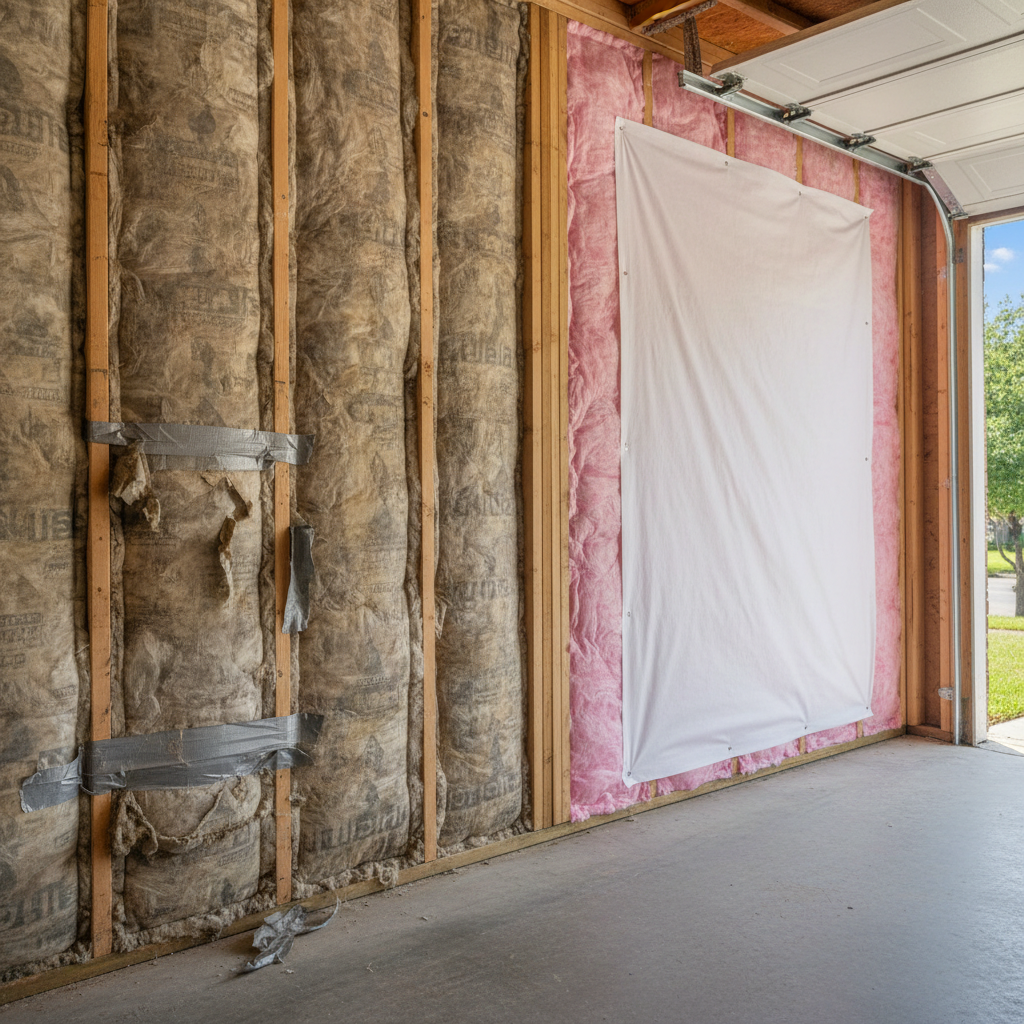
Alright, let's talk about your garage. For a lot of folks here in Mansfield, it's not just a place to park the car. It's a workshop, a home gym, a storage area, or even an overflow living space. And if you've spent any time out there during a Texas summer, you know it can get brutal. Or, for that matter, a winter morning when the cold just bites right through the walls.
You're probably thinking about insulating it, and that's smart. But what's the best way to go? You've got a couple of main contenders when it comes to insulating an existing garage: rigid insulation panels or spray foam. I've seen both installed plenty of times, and each has its place. Let's break down what you need to know.
Rigid Insulation Panels: The DIY-Friendly Option
When I talk about rigid insulation panels, I'm usually referring to things like expanded polystyrene (EPS), extruded polystyrene (XPS), or polyisocyanurate (polyiso) boards. These come in standard sizes, often 4x8 feet, and varying thicknesses.
- Cost: Generally, rigid panels are going to be your more budget-friendly option upfront, especially if you're doing the work yourself. You can pick these up at any big box store. The material cost per square foot is usually lower than spray foam.
- Durability: These panels are pretty durable on their own. They don't sag or settle over time like some other insulation types. However, they can be damaged by impact if they're exposed, so if you've got kids playing basketball or you're constantly bumping into the walls, that's something to consider.
- Maintenance: Once they're in, there's really no maintenance needed. Just make sure they stay dry. If they get wet repeatedly, especially EPS, they can lose their insulating properties.
- Appearance: This is where panels can be a bit of a mixed bag. If you're just sticking them into the garage door panels, they'll look like, well, insulation panels. If you're insulating the walls, you'll typically need to cover them with drywall or another finish material to make it look good and meet fire codes. You're not going to leave exposed foam panels on your walls unless you're going for a very industrial look, and even then, fire safety is a concern.
- Installation: This is where panels shine for the DIYer. You can cut them to size with a utility knife and fit them into wall cavities or garage door sections. It's a pretty straightforward process, though getting a perfectly sealed, airtight fit can be tricky.
Spray Foam Insulation: The Premium Solution
Now, let's talk about spray foam. This is what we specialize in at Apex Insulation, and for good reason. When applied correctly, it's a powerhouse.
- Cost: Spray foam is almost always going to be more expensive than rigid panels, especially if you're hiring a professional. The material itself costs more, and the application requires specialized equipment and expertise. However, you're paying for a superior product and installation.
- Durability: This stuff is incredibly durable. Once it cures, it forms a rigid, seamless barrier that won't sag, settle, or degrade over time. Pests hate it. It adds structural integrity to your walls. It's built to last for the lifetime of your home.
- Maintenance: Zero maintenance. Seriously. Once it's in, you don't touch it. It's sealed, it's permanent.
- Appearance: Like panels, spray foam will need to be covered if it's on your walls to meet fire codes and for aesthetics. However, when it's applied, it fills every nook and cranny, creating a perfectly sealed envelope. This means no drafts, no gaps, just a smooth, uniform layer under your drywall. For garage doors, it's not typically used as a direct replacement for panels; you'd usually insulate the entire garage envelope.
- Installation: This is not a DIY project for your average homeowner. It requires specific equipment, safety gear, and training to mix and apply correctly. You need to know what you're doing to get the right expansion, density, and coverage. That's why folks call pros like us.
Which One for Your Mansfield Garage?
Okay, so you've got the rundown. If you're just looking to take the edge off the heat or cold in your garage door and you're on a tight budget, rigid panels are a decent, DIY-friendly option. They'll definitely make a difference compared to nothing at all.
But if you want to turn your garage into a truly comfortable, energy-efficient extension of your home, especially with our crazy Mansfield weather — those 100-degree summers and occasional hard freezes — then spray foam is the clear winner. It's not just about insulation; it's about air sealing. Spray foam expands to fill every void, blocking air leakage that panels just can't match. This is huge for energy efficiency and comfort. Think about those older homes in the Garden Heights area, or even newer builds in places like South Pointe, where drafts can be a real issue. Spray foam tackles that head-on.
You'll get better temperature control, lower energy bills (especially if your garage shares a wall with conditioned living space), and a much quieter space. Plus, it helps keep out dust and allergens. The upfront cost is higher, yes, but the long-term benefits in comfort, durability, and energy savings usually make it a worthwhile investment. Give us a call at Apex Insulation if you want to talk specifics about getting your garage done right.