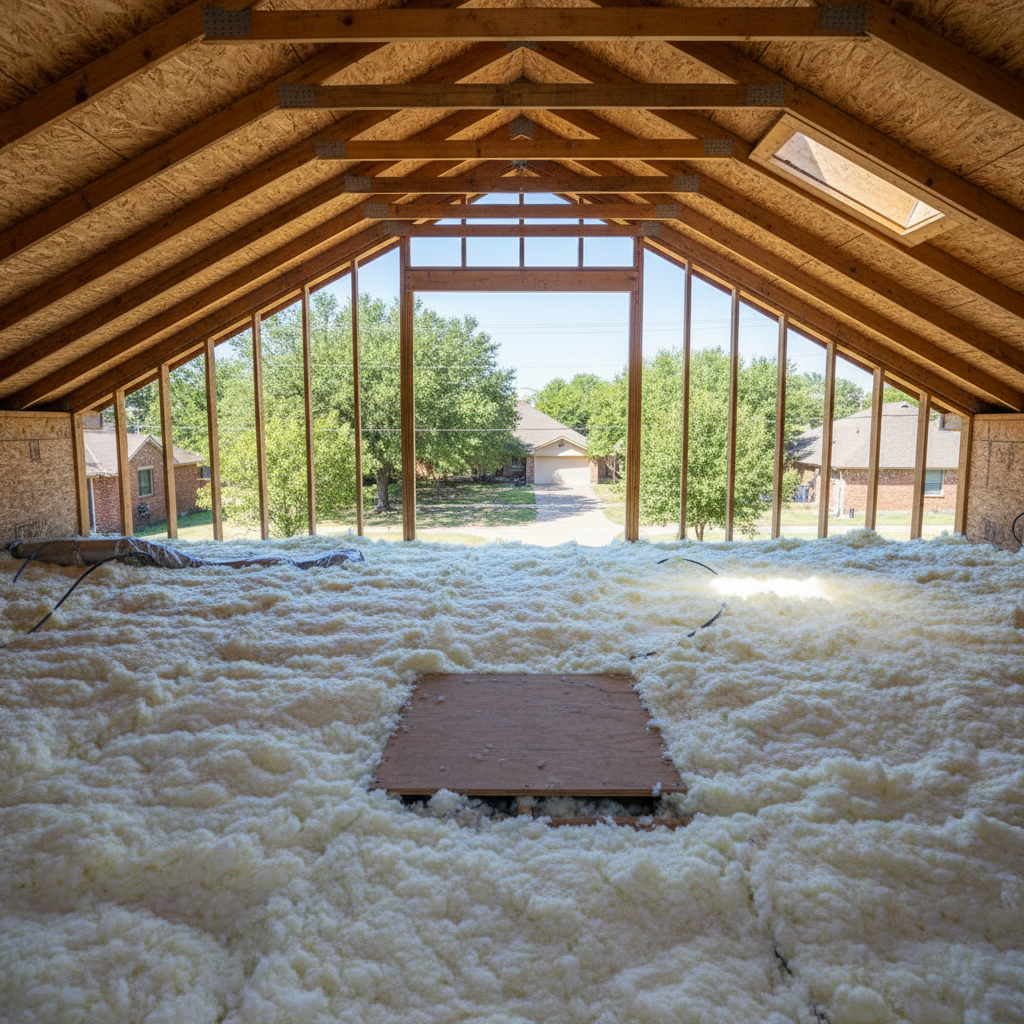
What's the real cost of attic insulation here in Mansfield? That's usually the first thing people ask me, and it's a fair question. You want to cut down on energy bills, make your home more comfortable, and maybe even bump up its value – but nobody wants to get ripped off. I've been in this business a long time, and I've seen it all. We're talking everything from brand new houses over in Oliver Creek to those charming older places near Historic Downtown.
So, What Makes the Price Tag Go Up or Down?
A lot of folks think insulation is just insulation, right? But that's not how it works. Several key things really impact the final bill:
- The Type of Insulation: This is probably the biggest factor. Blown-in fiberglass or cellulose usually offers the most bang for your buck. For a standard R-38 or R-49 upgrade, including material and installation, you're generally looking at around $1.00 to $2.50 per square foot. Spray foam, especially the closed-cell kind, is a whole different animal. It's top-tier stuff, and you'll pay for that quality – often $3.00 to $7.00 per square foot, sometimes even more, depending on how thick it needs to be and what type we use.
- Your Current R-Value vs. What You Want: If your attic has practically nothing up there, maybe an R-10, and you're aiming for an R-49, that means a lot more material than if you're just adding a bit more to an existing R-30 to hit R-49. More material, naturally, means more cost.
- How Easy It Is to Get Around in Your Attic: Is your attic a breeze to access? Can we stand up straight, or are we crawling on our bellies through tight spots? Is it packed with old boxes and junk we have to shift? The tougher the work environment, the more labor hours it takes, and that adds up.
- Insulation Removal: This one often catches people by surprise. If your old insulation is damp, moldy, full of pests, or just completely falling apart, we'll need to pull it out. And removal isn't cheap. It calls for special gear, protective clothing, and proper disposal. You could be looking at an extra $1.00 to $2.50 per square foot just for removal, and that's on top of the new insulation cost.
- Sealing and Ventilation: A good insulation job isn't just about blowing in material. We always suggest air sealing first. Plugging up those tiny leaks around light fixtures, plumbing stacks, and top plates can stop a huge amount of air from escaping. This might add a few hundred dollars to the project, but it makes your insulation work so much better. Sometimes, we also need to improve ventilation, especially in older homes that weren't built with today's airflow standards in mind.
What You Can Expect to Pay for Mansfield Attics
Okay, let's talk some actual numbers for a typical 1,500 to 2,500 square foot home right here in Mansfield. These are just estimates, of course, but they'll give you a pretty good idea:
- Blown-in Fiberglass or Cellulose (R-38 to R-49 upgrade, no removal): For a 2,000 sq ft attic, you're probably looking at somewhere between $2,000 and $5,000. This covers adding insulation on top of what's already there, or if the attic is empty and easy to get into.
- Blown-in Fiberglass or Cellulose (R-38 to R-49, with removal): If we have to vacuum out old, gross insulation from that same 2,000 sq ft attic, tack on another $2,000 to $5,000 for the removal and disposal. So, the total could land anywhere from $4,000 to $10,000.
- Spray Foam (Open-Cell, R-38 equivalent, no removal): This is a big jump in price. For a 2,000 sq ft attic, expect to pay roughly $6,000 to $14,000. This is for spraying the attic floor. If you're insulating the roof deck itself, it generally costs more.
- Spray Foam (Closed-Cell, R-38 equivalent, no removal): Even pricier. A 2,000 sq ft attic could easily run you $10,000 to $20,000 or more. Closed-cell is really dense and does a fantastic job with air sealing and even adds some structural benefits, but it's definitely a premium product.
Remember, these are just ranges. Your specific situation will determine where your project falls within them.
What Should a Quote Include?
When you get a quote from Apex Insulation, or any other reputable company for that matter, it should be clear and detailed. Here's what I always make sure to include:
- Square Footage: The exact area we'll be insulating.
- Insulation Type & R-Value: A clear statement of whether it's fiberglass, cellulose, open-cell, closed-cell, and the target R-value.
- Prep Work: Does it cover air sealing? Baffles for ventilation? Moving existing items?
- Insulation Removal: If we need to do this, it should be a separate line item with its own cost.
- Cleanup: What's included in the cleanup after we're done?
- Warranty: What kind of warranty comes with the materials and our labor?
- Total Cost: The final, all-inclusive price. No surprises, ever.
How to Avoid Paying Too Much
Don't just pick the first quote you get. Grab at least three. Make sure they're all quoting for the exact same amount of work and the same R-value. Ask lots of questions! A good contractor will take the time to explain everything. Be wary of super low bids – they often cut corners on material quality, skimp on the R-value, or skip crucial steps like air sealing. And please, don't fall for high-pressure sales tactics. A quality job done right will save you money in the long run, especially with our scorching Texas summers making your AC unit work overtime.
Final Thoughts
Putting money into your attic insulation is one of the smartest home improvements you can make, truly. It's not just about feeling more comfortable; it's about protecting your biggest asset and saving cash every single month. Do your homework, get solid quotes, and make sure you're working with someone who really knows their stuff. It'll pay off, I promise.